Kovalevsky Maksim
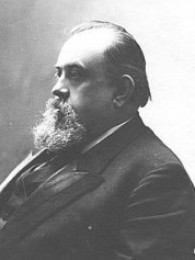
Maksim Kovalevsky (b. September 8, 1851, Kharkiv – d. April 5, 1916, Petrograd), Russian historian, ethnographer, lawyer, sociologist, full member of the St. Petersburg Academy of Sciences (1914), professor of Moscow (1878–1887) and St. Petersburg (1905–1916) universities. In 1872, he graduated from the Faculty of Law of Kharkiv University; he also studied in Berlin, Vienna, Paris and London. In 1906, he was elected to the First State Duma, in 1907 – to the State Council.
Kovalevsky traveled to the Caucasus three times (1883, 1885, 1887). The material he collected here formed the basis for important research. His main work is Law and Custom in the Caucasus (Законъ и обычай на Кавказе, 2 volumes, 1890). In chapter 4, Volume 1, “The Influence of Armenian and Georgian Law”, he discussed the influence of Georgian law (George V the Brilliant’s Dzeglis Dadeba (A book of Georgian law compiled during the reign of George V the Brilliant), the Law of Beka and Aghbugha, the Law of Vakhtang VI) and its reflection on the customs and customary law of the mountaineers of the Caucasus. The second volume consists of two sections: “Mountaineers of Samegrelo and Georgia” and “Mountaineers of Dagestan”. The first is divided into chapters: 1. “The Social and Political Structure of the Svans”, where he calls the Svans ancient tribes, which were even mentioned by ancient Greek chroniclers and geographers. They live at the highest altitude in Europe. The geographical location of Svaneti, its isolation from the outside world, led to the preservation of the clan system there in a perfect form for a longer time. It was based on blood kinship. He described the rules of marriage, the advantage of having a son; 2. “Pshavs, their religious superstitions, social order and legal life”, where he wrote that Pshavs (Pkhovelebi) were very ancient people, living a clan life, although at the same time they retained earlier forms of development. Unlike other Georgians and like Khevsurians, they do not recognize either ranks, serfdom or feudal attitudes. Together with Khevsurians, they were reliable defenders of Georgia in times of trial. Pshavs were very carefree; they conveyed their joy and sorrow in poems and songs. Kovalevsky described the attitude of Pshavs towards Christianity, marriage and funeral rituals, and the rules of attitude towards women; 3. In “Customary law of Khevsurians and Tushetians” Kovalevsky described the family structure of Tushetians and Khevsurians, the rules of property ownership, and criminal law, which was based on the rule of blood feud. He described the resolution of court disputes based on the oath of the defendant, relatives, and fellow villagers, as well as the rule of dividing inheritance between brothers, etc.
Literary work: Законъ и обычай на Кавказе (2 ტომად), М., 1890.
Literature: შამილაძე ვ., მიმინოშვილი ო., ქართული ეთნოლოგიის ისტორია, თბ.; 2009.
L. Maniava