Ioane Batonishvili
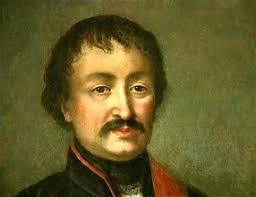
Ioane Batonishvili (B a g r a t i o n i) (May 16, 1768, Tbilisi – February 15, 1830, Saint Petersburg), state and military figure, educator, writer, scientist, translator, lexicographer, adjutant general (1803), son of Giorgi XII. He received his primary education under the guidance of Davit Rektori.
In 1789, he fought against the Lekians at Zedavela; in 1790, in Imereti, upon the assignment of King Erekle, he defended the throne of Solomon II from the invasions of pretenders. In 1795, in the battle against Agha Mohammad Khan, he was the commander of the vanguard detachment: in the gardens of Krtsanisi, he repelled the first strike of the enemy, pushed them back, and subsequently saved King Erekle from captivity. In 1796, he defended the village of Shilda from the invasions of Omar Khan (the lord of Khundzakh). In 1798, near the village of Dirbi, he defeated the Lekians. In the same year, alongside Davit Batonishvili, he campaigned against the pashalik of Karsi [Qarsi] and emerged victorious. In 1800, he distinguished himself in the battle against Omar Khan at Niakhura. Following the death of Giorgi XII, he actively assisted Davit Batonishvili in consolidating the throne. In 1801, the Russian government forced Ioane Batonishvili to leave his homeland (along with his brothers) and relocate to Russia. He initially paused in Moscow, and from February 1802, he settled in Petersburg.
Ioane Batonishvili began his scientific activities early. From 1794 to 1798, he directed (along with Davit Batonishvili) the census of Kartli-Kakheti. In 1799, he wrote the important work "Sjuldeba", in which the issues of the governance of Georgia and the reorganization of its political-social and cultural-economic life are raised. Interesting is the author's opinion regarding the introduction of the post of "official of education," who would have to direct the activities of schools and the printing press; he also considered it necessary to open higher educational institutions in Tbilisi, Gori, and Telavi; to introduce primary education for the children of merchants and peasants, and others. After settling in Petersburg, he worked diligently in various fields of science and art. He commissioned translations and personally translated scientific works, textbooks, dictionaries, and medical books containing progressive ideas, and sent them to Georgia.
Significant are his original compositions: the historical works "Kartl-Kakhetis aghtsera" (Description of Kartli-Kakheti), "Bagrationta Shtamomavloba" (Descendants of the Bagrations); "Kartuli Leksikoni" (Georgian Dictionary), of which only a fragment has survived (Aa-Anola), "Mokle Rusul-Kartuli Leksikoni" (Short Russian-Georgian Dictionary), "Saleksikono Masalebi" (Lexicographical Materials), "Kartuli Gramatika" (Georgian Grammar), "Stsavlani" (Teachings) – an encyclopedic composition, "Patara Edemit Gandzeba" (Exile from Little Eden) written with longing for the homeland, and others.
The crown of his creative work is the encyclopedic composition "Khumartsavla", or "Kalmasoba", which was written from 1813 to 1828. Ioane Batonishvili, as one desiring and preaching the transformation of Georgian social life according to the European model, conveys the ideas of the enlighteners in his composition. A second independent grammatical work (1829) is intended as a textbook. The author fully utilized Davit Batonishvili's grammar, although certain (insignificant) deviations are nevertheless noticeable within it.
Literary works: სჯულდება, ივ. სურგულაძის გამოც., თბ., 1957; ქართლ-კახეთის აღწერა, თ. ენუქიძისა და გ. ბედოშვილის გამოც., თბ., 1986; ხუმარსწავლა, ც. კახაბრიშვილის და ც. კიკვიძის გამოც., წგ. 1–2, თბ, 1990–91.
Literature: კიკნაძე ლ., იოანე ბატონიშვილის კალმასობისეული ქართული გრამატიკის ტექსტისათვის, «მრავალთავი» (ფილოლ.-ისტ. ძიებანი), XX, თბ., 2003; ფოცხიშვილი ა., ქართული ენათმეცნიერების ისტორია, I, თბ., 1995; ქიქოძე გ., წერილები, ესეები, ნარკვევები, თბ., 1985; ქუთათელაძე ლ., იოანე ბაგრატიონის "ქართული ლექსიკონი", თბ., 1975.
L. Kiknadze