Teimuraz II
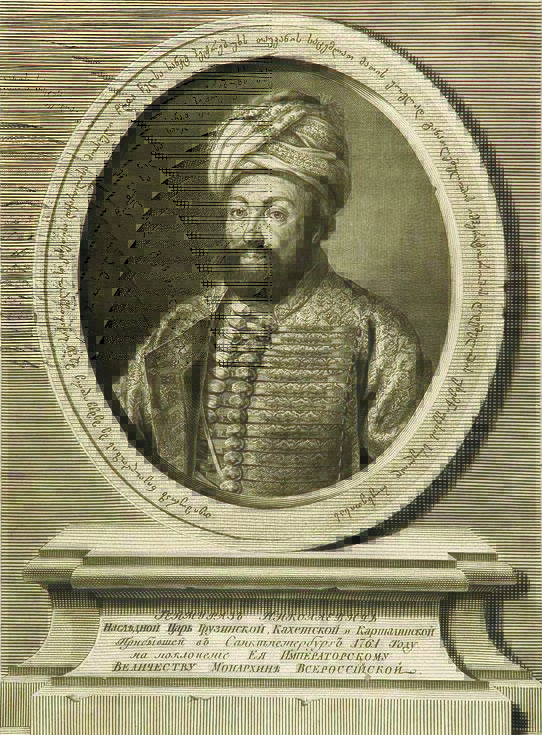
Teimuraz II (1700, Tbilisi – 8. I. 1762, Saint Petersburg), Governor of Kakheti (1709–1715), King of Kakheti (1733–1744), King of Kartli (1744–1762), poet, and translator. He was the younger son of Erekle I and Ana Choloyashvili. In 1709, following the death of King Erekle I in Iran, the Shah summoned David II (Imam-Quli Khan) to be confirmed on the Kakhetian throne, where he remained until 1715. For political reasons, Teimuraz II was married to Tamar, the daughter of Vakhtang VI, a union that later played a positive role in the unification of Kartl-Kakheti. Due to constant Lek raids (Lekianoba), he frequently moved between Telavi, Manavi, and Magharo, occasionally seeking refuge with his family in Pshavi. During this period, the Ottoman Empire successfully challenged Iran and Russia for dominance in the South Caucasus; after capturing Tbilisi in 1723, the Ottomans advanced eastward.
Teimuraz II’s brother, Constantine II (Mahmad Quli Khan), prepared for the defense of Kakheti. However, Ottoman influence grew daily. In 1732, Constantine was killed by the Ottomans, and Teimuraz II fled to Pshavi. Soon, he diplomatically submitted to the Ottomans, in exchange for which he received the governorship of Kakheti. Meanwhile, a resurgent Iran attacked the Ottomans in the South Caucasus. In alliance with the Persians, Teimuraz II defeated Ottoman and Lezgin forces several times, expelled them from Kakheti, and attempted to reclaim Char. Nevertheless, the Persian commander Thammasp Quli Khan (later Nader Shah) viewed Georgian cooperation with suspicion. While in Erevan, he summoned Teimuraz II and the Kartli-Kakhetian nobles; he imprisoned some and appointed Teimuraz’s nephew, Prince Alexander (Ali-Mirza), as governor, tasking him with collecting heavy tribute.
The period of "Qizilbashoba" (Red-Head rule) began in Eastern Georgia. After his coronation in 1736, Nader Shah demanded new taxes, causing great discontent. The Shah's commander, Sephi-Khan, arrested Teimuraz II along with other nobles and sent them to Iran. Nader received Teimuraz with honor but demanded that his son, Erekle, be brought to him. Teimuraz was sent back, while Erekle accompanied the Shah on his Indian campaign. Through loyal service, Teimuraz II earned Nader Shah's trust. To maintain control over Kartli, the Shah confirmed Teimuraz II as King of Kartli and Erekle as King of Kakheti in July 1744. Through flexible and loyal policy, Teimuraz II consolidated his power and restricted the influence of the great feudal lords. On October 1, 1745, he was crowned according to Christian rites at the Svetitskhoveli Cathedral, laying the foundation for the future unification of Kartli-Kakheti.
In his later years, Nader Shah imposed immense taxes. Teimuraz II defied the Shah and took refuge in Ananuri, but they later reconciled on the condition that Erekle II be sent to Iran. Teimuraz traveled to Iran himself, only to find the Shah had been assassinated (1747). Amidst the ensuing chaos, Teimuraz utilized the situation to his advantage and returned home in 1749 with great honors, receiving the Khanate of Kazakh in addition to Borchalo. By 1749, the Khanates of Erevan, Ganja, and Nakhchivan became vassals (qmadnapitsi) of Kartl-Kakheti. His primacy in the South Caucasus was confirmed when the Shah of Iran granted him the rank of Spasalar (Commander-in-Chief) of Iran and Azerbaijan.
Recognizing the threats from Iran and the Ottomans, Teimuraz II sought Russian assistance. In April 1760, he traveled to St. Petersburg to request military and financial aid to campaign in Iran and place a pro-Russian Shah on the throne. After two years of futile waiting, he passed away there. He is interred in Astrakhan at the Assumption Cathedral, beside the grave of his father-in-law, Vakhtang VI.
Teimuraz II was a prominent figure of the Georgian Renaissance in literature. His most notable work is the poem Dispute Between Day and Night (also known as The Mirror of Sayings). The first part is religious, while the second concerns Georgian ethics and daily life, providing valuable ethnographic data on ancient customs. His autobiographical poem Adventures (Tavgadasavali) and Praise of the Palace offer historical insights into the royal courts. He also translated the collection of fables Timsariani from Persian.
Literary works: თხზულებათა სრული კრებული, გ. ჯაკობიას რედ. თბ., 1939.წყარო: ვახუშტი, აღწერა სამეფოსა საქართველოსა, წგ.: ქართლის ცხოვრება, ს. ყაუხჩიშვილის გამოც., ტ. 4, თბ., 1973.
Literature: აბაშიძე ზ., ბახტაძე მ., ჯანელიძე ო., საქართველო და ქართველები, თბ., 2015; აფციაური ჯ., თეიმურაზი, თბ., 1991; ბიბილაშვილი ა., თეიმურაზ II-ის ქართლში გამეფების თარიღისათვის, კრ.: მესხეთი, ტ. 5, თბ., 2002; ბლიაძე ე., საგარეო ორიენტაციის პრობლემები XVIII საუკუნის ქართულ პოლიტიკურ აზროვნებაში, ქუთ., 2004; როგავა თ., თეიმურაზ მეორის „სარკე თქმულთას" ბიბლიური წყაროს ზოგიერთი ასპექტისათვის, «კლასიკური და თანამედროვე ქართული მწერლობა» 2006, №10.
G. Narsia
S. Tsaishvili