Tli Necropolis
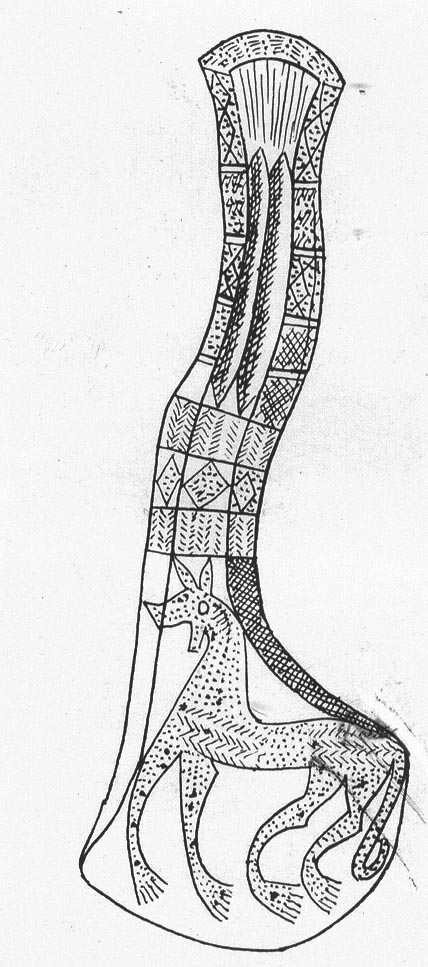
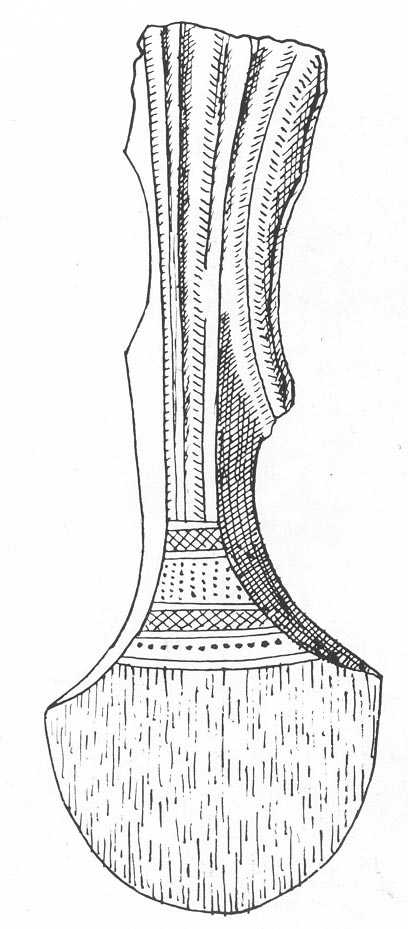
Tli Necropolis, an archaeological site of the Late Bronze and Iron Ages (12th–7th centuries BC) located within the territory of the village of Tli (Java Municipality).
Small-scale archaeological excavations were conducted in 1889 (Kh. Kaniukov), 1890 (V. Dolbezhev, F. Heger), and 1891 (P. Uvarova). Systematic archaeological excavations started in 1955 under the direction of B. Tekhov. In the pit graves and stone tombs, the deceased were buried lying on their right side in a flexed position (with bent arms and legs).
Inside the graves were bronze weapons (axes, daggers, spearheads), jewelry (buckles, clasps, brooches, neck rings, bracelets, toggles, buttons, beads, etc.), and vessels (buckets, bowls, pitchers). There was also a small quantity of iron objects (acinaces, daggers, curved knives, spearheads, brooches); carnelian, glass, and paste beads; and a few clay vessels. A significant portion of the artifacts is decorated with zoomorphic (deer, horse, dog, snake, fish) and geometric (swastika, "Maltese" cross, rayed circles, etc.) ornamentation, while some exhibit styles characteristic of Urartian and Scythian art.
The archaeological material discovered at the Tli Necropolis is similar to artifacts from Western Georgia and the Koban necropolis. The Tli Necropolis falls within the sphere of influence of the Colchian culture. The population to which the necropolis belonged was at the stage of a tribal system. During the last centuries of the necropolis's existence, the process of the disintegration of the tribal system intensified.
The population engaged in animal husbandry and agriculture, and bronze metallurgy was highly developed. The broad transition to iron production began only in the 7th century BCE.
The material from the Tli Necropolis is preserved in the State Historical Museum in Moscow, in Tskhinvali, and in Vienna.
Literature: Техов Б. В., Очерки древней истории и археологии Юго-Осетии, Тб., 1971.
L. Pantskava